Inspired by Sony, the future of smartphone camera technology?
Sony recently released a new smartphone camera concept. These standalone camera devices can pair with a smartphone via bluetooth to become the screen for the camera, allowing access from the phone to use the picture instantly. It’s taking quality camera components (found in their high-end compact models) and making them as accessible as the (comparatively rubbish) camera already in your phone.
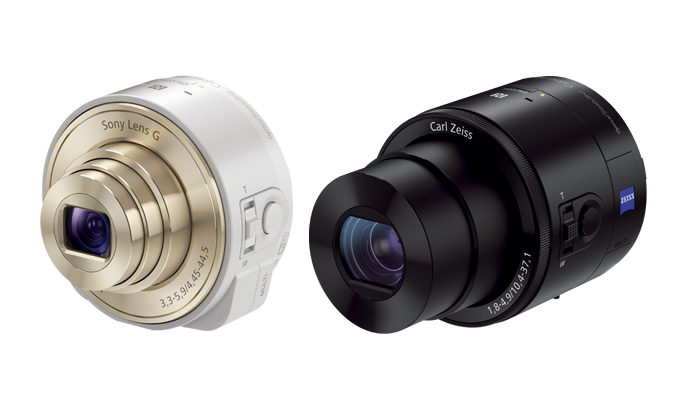
It seems like an original and potentially brilliant concept, but no one wants to carry two separate devices. High-quality photography equipment has certain limitations due to physics; sensor sizes needs to be a certain surface area to capture enough photons, lenses need to be made from certain sizes glass to focus that light on a sensor of a reasonable size. Mobile phone’s need to be thin and light. The two don’t mix well. But is the solution to carry around a device with no viewfinder that only works well when paired with a phone? Clearly not.
We doubt anyone expects this to be a runaway success, including Sony who are likely doing a relatively short production run. But what is interesting is what this step might mean for the future of camera and smartphone technology. The concept inspired us and sparked our imaginations.
Imagine a traditional camera with this bluetooth pairing technology. Smartphones could be used as remotes to operate cameras (already possible in a fairly clunky way with models such as Canon’s 5D mkIII), making self-timers obsolete, and remote shutter releases for tripod use a joy. If all camera controls could also be remotely controlled, aperture, shutter speed, focus, ISO, metering, white-balance, etc.. You could do everything except compose the scene remotely.
The camera body could also process smaller-resolution versions to send directly to the phone library for immediate editing and sharing. You could even pair multiple phones. Imagine being on holiday and everyone’s photos all ending up in a shared photo library, Mum could see the photos Dad is taking as he’s taking them, keeping (lower resolution) backups on multiple devices paired in case of data-loss elsewhere.
You could use the phone UI to browse photos on the camera, deleting unwanted snaps, and even editing in-device, ideally saving the editing profile to apply to the full-resolution images later in desktop software.
We think this it the future of what Sony has started exploring here today, and it’s a future we look forward to being involved with, both as users, and with any luck as interaction designers; helping make these interfaces a reality.